
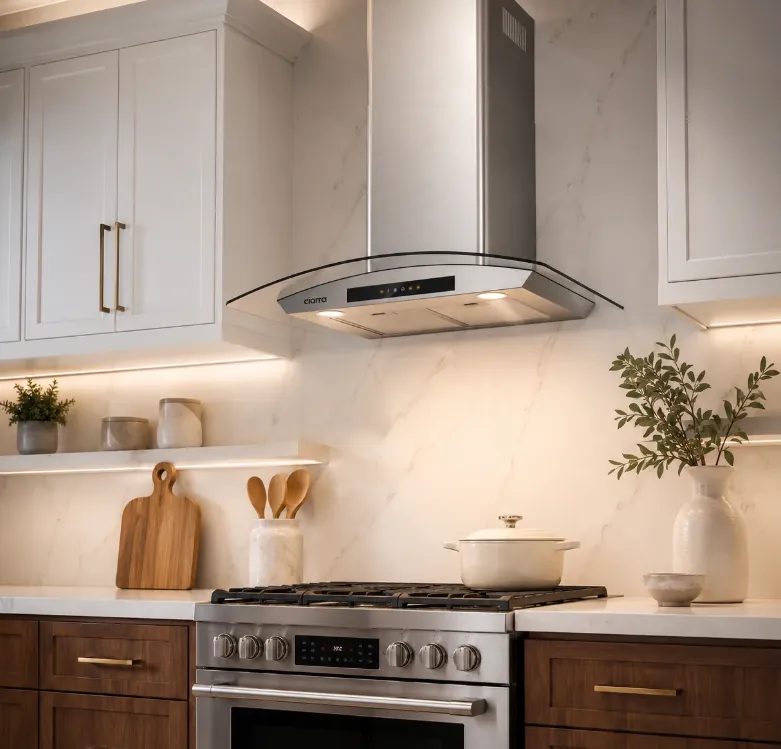
A beautiful kitchen is more than a place to prepare meals. It is where delicious aromas fill the air, family members gather around the counter, and everyday cooking becomes a memorable experience. However, without proper ventilation, even the most attractive kitchen can quickly become filled with smoke, lingering odors, grease, and excess heat. That is where a 400 CFM range hood becomes a valuable addition to your cooking space.
Designed to remove airborne cooking particles and help maintain a fresher indoor environment, a ventilation system with 400 cubic feet per minute (CFM) of airflow can be an excellent choice for many everyday cooking needs. Whether you enjoy preparing quick breakfasts, simmering flavorful sauces, or cooking family dinners, the right ventilation can make your kitchen more comfortable.
From modern apartments to traditional family homes, choosing an effective ventilation solution can improve the overall cooking experience. Understanding airflow capacity, installation options, noise levels, and maintenance requirements will help you select a model that complements your kitchen and lifestyle.
1. Understanding What 400 CFM Really Means
Before choosing a ventilation system, it is important to understand what the CFM rating represents. CFM stands for cubic feet per minute, a measurement used to describe the volume of air a fan can move under specified conditions.
A 400 CFM ventilation unit is rated to move approximately 400 cubic feet of air per minute under its rated operating conditions. Actual airflow can vary depending on ductwork, installation quality, filters, and operating settings.
This capacity makes it a practical option for many everyday kitchens, particularly those with standard residential cooktops and moderate cooking habits.
For example, preparing vegetables, boiling pasta, frying eggs, and cooking ordinary family meals can release steam, odors, and airborne grease. A properly installed ventilation system helps capture and remove these contaminants before they spread throughout the room.
However, airflow requirements depend on more than the CFM number alone. Cooktop size, burner output, cooking style, and the hood’s ability to capture rising fumes all influence performance.
The goal is to find a system that offers effective ventilation without purchasing significantly more capacity than your kitchen requires.
2. Why a 400 CFM Model Is Ideal for Everyday Cooking
Not every kitchen needs an industrial-strength ventilation system. For many households, a moderate airflow capacity offers a sensible balance between performance, convenience, and energy use.
A 400 CFM model can provide several advantages when correctly matched to the cooking equipment and ventilation layout.
Effective smoke and odor removal: Cooking fish, sautéing vegetables, and preparing aromatic dishes can release strong odors. A properly positioned hood helps capture these airborne emissions and, when ducted outdoors, expels them from the home.
Better control of airborne grease: Frying and searing can release tiny grease particles that settle on cabinets, walls, and nearby surfaces. Effective ventilation and clean filters help reduce this buildup.
Improved comfort: Steam and heat from cooking can make a small kitchen feel uncomfortable. Ventilation helps remove some of the warm, moisture-laden air generated during meal preparation.
Practical everyday performance: For homeowners who prepare regular meals without frequently using multiple high-output burners, 400 CFM may provide an appropriate level of ventilation.
Nevertheless, households that frequently stir-fry at high temperatures, grill indoors, or operate powerful gas burners may need a higher-capacity system.
3. Explore Different Styles to Match Your Kitchen
Modern ventilation products are available in a wide variety of designs. Choosing the right style allows you to combine practical performance with the appearance of your kitchen.
Under-Cabinet Range Hoods
Under-cabinet models fit beneath existing kitchen cabinets, making them particularly useful when space is limited. Their compact design allows homeowners to improve ventilation without substantially changing the kitchen layout.
They are often suitable for smaller kitchens, apartments, and straightforward renovation projects.
Wall-Mounted Chimney Hoods
Wall-mounted designs create an attractive focal point above a cooking range. Their chimney-style structure can complement contemporary, minimalist, and industrial-inspired interiors.
Depending on the model, they may offer multiple fan speeds, integrated lighting, and convenient filter access.
Island Range Hoods
For kitchens featuring a cooking island, a ceiling-mounted hood can provide ventilation while maintaining an open layout.
Island cooking can require careful attention to capture performance because air currents may carry smoke away from the hood. Buyers should verify that the selected model is appropriate for their cooktop size and installation conditions.
Convertible Ventilation Systems
Some models support both ducted and ductless operation. Ducted systems discharge air outdoors, while ductless systems use filters to reduce odors and recirculate the air into the kitchen.
Convertible designs offer installation flexibility, although their performance depends on the configuration and filtration system.
4. Ducted vs. Ductless: Which Option Makes More Sense?
One of the most important decisions when selecting a ventilation system is choosing how the extracted air will be handled.
A ducted installation carries air outside through a properly sized duct. When correctly designed, it can remove smoke, odors, moisture, and cooking by-products from the indoor environment. This makes it an attractive option for households that cook frequently.
A ductless installation works differently. It draws air through filters, often including a grease filter and an activated-carbon filter, before returning the treated air to the kitchen.
Ductless systems can be convenient where installing exterior ductwork is difficult or prohibited. However, they generally do not remove heat and moisture from the room in the same way as a ducted system.
Carbon filters also require periodic replacement to maintain odor-control performance.
When comparing the two options, consider your building’s layout, installation budget, cooking habits, and ability to vent outdoors. A flexible installation is useful, but effective performance should remain the priority.
5. Noise Levels and Everyday Comfort
A powerful fan is helpful, but excessive noise can make cooking less enjoyable. If the ventilation system sounds overwhelming, you may be tempted to avoid using it, even when it would be beneficial.
Fortunately, many modern models offer multiple fan speeds, allowing users to select an appropriate setting for different cooking activities.
A lower setting may be sufficient when boiling water or warming food, while a higher setting can help manage stronger cooking emissions.
Noise depends on several factors, including fan design, motor quality, duct diameter, bends in the ductwork, installation quality, and the selected speed. A 400 CFM rating alone does not guarantee quiet operation.
Before purchasing, compare the manufacturer’s published noise ratings, paying attention to the settings at which they were measured. If possible, look for independent reviews that discuss real-world operation.
Proper installation also matters. Restricted ducts, loose fittings, and unnecessary bends can increase resistance and contribute to unwanted noise.
6. Essential Features Worth Considering
The best ventilation system is not necessarily the one with the longest feature list. Instead, prioritize features that make daily cooking easier and maintenance more manageable.
Multiple fan speeds: Adjustable settings provide flexibility for everything from light cooking to smoky preparations.
LED lighting: Integrated lights illuminate the cooking surface, helping you monitor food without relying entirely on overhead kitchen lighting.
Washable grease filters: Removable metal filters can usually be cleaned according to the manufacturer’s instructions, helping maintain airflow and reduce grease accumulation.
Simple controls: Push-button, touch, or other intuitive controls make changing fan speeds and lighting convenient.
Durable construction: Stainless steel and other quality materials can offer an attractive appearance and practical durability when properly maintained.
Easy filter access: A design that allows filters to be removed without difficulty encourages regular cleaning.
Consider your daily routine when comparing these features. A straightforward, reliable model may be more useful than an expensive unit with functions you rarely need.
7. Installation Tips for Better Performance
Even a well-designed ventilation system may perform poorly if installed incorrectly. Before purchasing, measure the cooking area and confirm the recommended mounting height specified by the manufacturer.
The hood should be wide enough to capture emissions from the cooking surface effectively. A hood that is too narrow may allow smoke and grease to escape around its edges.
For ducted installations, use the recommended duct diameter and keep the duct route as short and direct as practical. Excessive bends, undersized ducts, and obstructions can reduce airflow.
It is also important to follow electrical requirements and local building codes. Some powerful gas cooking installations may require additional ventilation capacity or replacement air provisions, depending on the appliance and applicable regulations.
If you are uncertain about duct routing, electrical connections, or mounting requirements, consider using a qualified installer.
A professional assessment can help determine whether a 400 CFM system is appropriate for your specific kitchen rather than relying on airflow capacity alone.
8. Maintenance: Keep Your Ventilation Working Efficiently
Regular maintenance helps preserve performance, improve cleanliness, and extend the useful life of your ventilation equipment.
Start by inspecting the grease filters regularly. Cooking frequency determines how quickly grease accumulates, so households that prepare fried foods often may need more frequent cleaning. Follow the manufacturer’s guidance regarding dishwasher compatibility and cleaning products.
Wipe the exterior with a suitable cleaner to remove fingerprints, splashes, and cooking residue. For stainless-steel finishes, use a nonabrasive cloth and follow the recommended cleaning direction.
Check the lighting, controls, and fan operation periodically. If you notice a sudden reduction in airflow, unusual vibration, or a significant increase in noise, inspect the filters and consult the product manual.
For ductless systems, replace activated-carbon filters at the recommended intervals. These filters cannot usually be restored simply by washing them.
Keeping the ventilation system clean allows it to work more consistently and helps your kitchen remain inviting throughout the year.
9. How to Choose the Best Model for Your Budget
Price should be only one part of your purchasing decision. A less expensive unit may appear attractive initially, but installation expenses, replacement filters, noise, and long-term reliability can affect its overall value.
Begin by checking whether the model is compatible with your cooktop. Review its airflow specifications, hood dimensions, mounting requirements, and ducting options.
Next, compare warranty coverage, replacement-filter availability, customer feedback, and the manufacturer’s support services.
If your kitchen is small and your cooking habits are relatively moderate, a straightforward 400 CFM unit may meet your needs without unnecessary complexity.
However, if you have a wide cooktop, powerful gas burners, or frequently prepare meals that generate substantial smoke and grease, consult the appliance manufacturer’s ventilation recommendations before settling on this capacity.
Remember that the most suitable product is the one that works effectively in your particular kitchen, not simply the one with the most appealing price or appearance.
Conclusion: Make Every Cooking Experience Fresher and More Enjoyable
A well-chosen ventilation system can transform your kitchen from a space where smoke and lingering odors collect into a cleaner, more comfortable place to prepare your favorite meals. By evaluating airflow, design, noise levels, filtration, installation requirements, and maintenance needs, you can make a confident decision that suits your household. For many homes, a 400 CFM range hood offers a practical starting point for balancing everyday ventilation with modern style, provided its capacity matches the cooktop and cooking habits. Take time to compare available features, verify installation requirements, and prioritize reliable performance. With the right choice, your kitchen can remain fresher, more inviting, and ready for everything from quick weekday breakfasts to delicious weekend feasts.
