
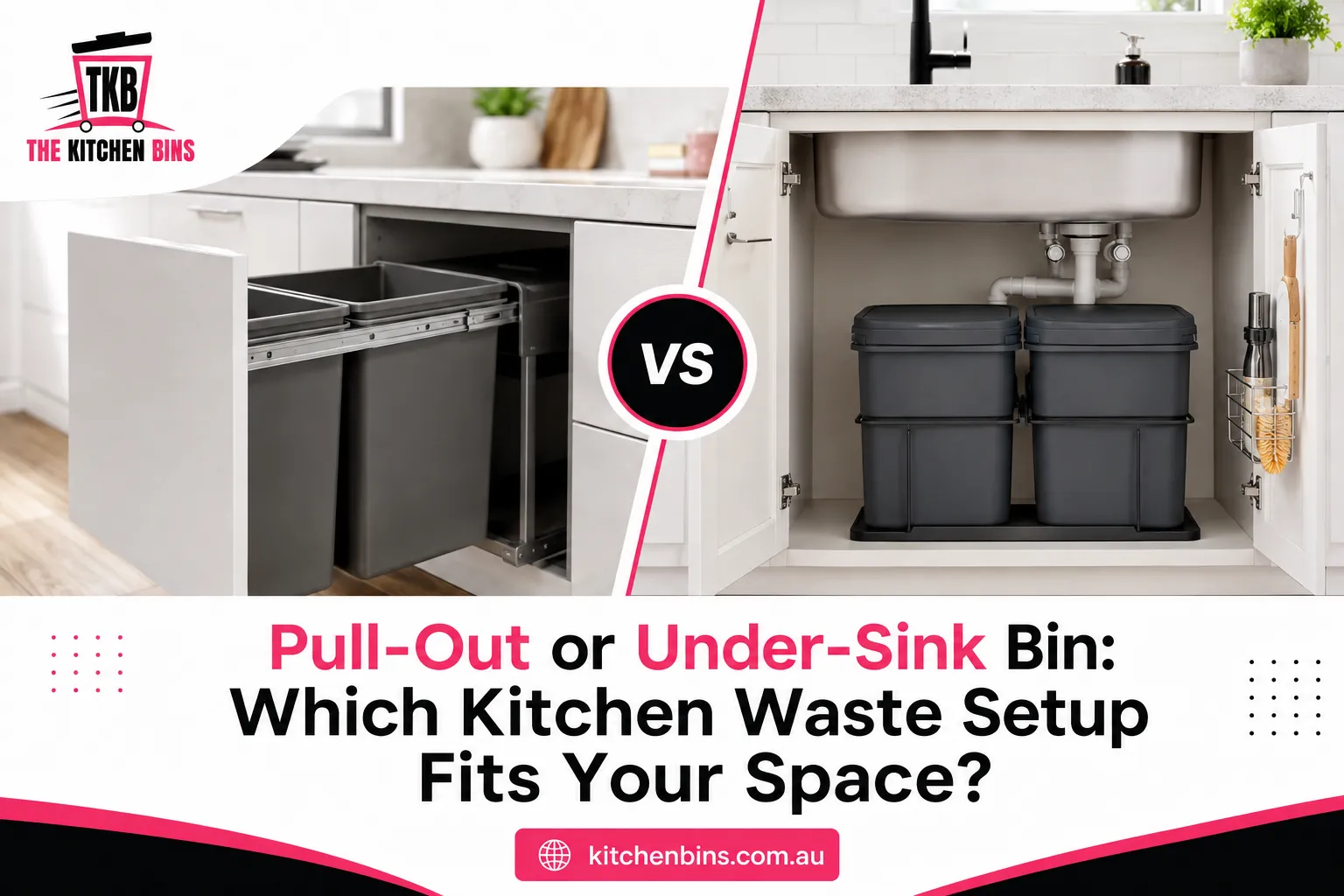
A waste bin is used constantly, yet it is often considered late in a kitchen layout. Where the bin is placed can influence movement, cabinet storage and how easily rubbish and recycling are managed during meal preparation.
Homeowners comparing kitchen bins should consider two questions together: how much waste capacity is required, and where is that capacity easiest to access?
Pull-out and under-sink arrangements can both work well, but they suit different cabinet conditions.
What Is a Pull-Out Bin?
A pull-out system is mounted within cabinetry and moves towards the user on runners or a supporting mechanism.
This design allows the container to sit deeper inside a cabinet while remaining accessible. A pull out bin can therefore make good use of lower cabinetry without requiring users to reach towards the back.
Pull out bin systems may contain one or multiple buckets depending on the design and available space.
What Makes Under-Sink Storage Different?
The space below a sink is shaped by plumbing.
An under sink bin needs to fit around the waste pipe, water connections and sink bowl. This makes measurement particularly important.
Under sink bin configurations can free other lower cabinets for cookware or pantry storage, but the available height and depth may be more restricted.
Compare the Available Cabinet Space
Start with internal dimensions rather than the width shown on the cabinet door.
Measure:
-
Clear internal width
-
Usable cabinet depth
-
Height beneath fixed structures
-
Hinge clearance
-
Pipe location
-
Door opening
-
Runner clearance where required
Kitchen bins that are designed for integrated cabinetry need enough space for both installation and normal movement.
Do Not Forget the Opening Path
A product can fit when closed and still fail during use.
Simulate the movement
Check where lids, buckets and runners travel as the system opens. Under a sink, this is particularly important because pipes can obstruct the upper part of the movement path.
Which Option Offers More Capacity?
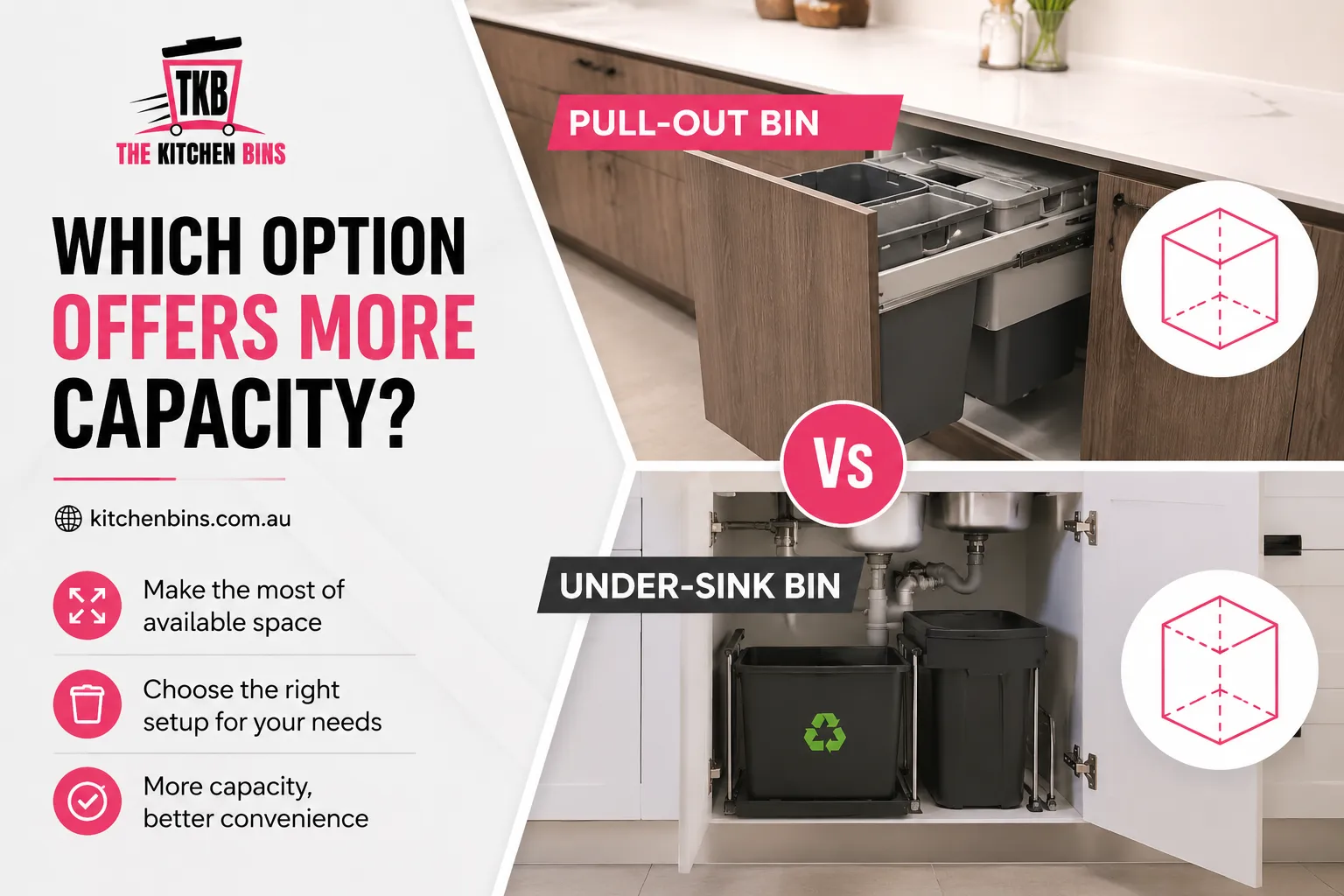
There is no universal answer because cabinet dimensions vary.
A full-height lower cabinet may accommodate a larger pull out bin than the restricted area under the sink. However, a well-planned under-sink layout can still provide useful capacity while making productive use of otherwise awkward space.
Think about how often your current waste container is emptied. This offers a realistic guide to minimum capacity.
Consider Waste Separation
Many households separate general waste and recycling.
If two containers are needed, look at how each waste stream accumulates. Recycling can sometimes require more volume because packaging is bulky even when lightweight.
A multi-bucket configuration may be more practical than trying to fit two separate freestanding containers elsewhere in the kitchen.
Think About Where Waste Is Generated
Location affects convenience.
A bin near the main preparation bench can reduce repeated movement when peeling vegetables, opening packaging or cleaning surfaces.
The Sink Is Not Always the Ideal Position
Many kitchens automatically place the waste bin beneath the sink.
Follow the workflow
If most preparation occurs on an island several steps away, a pull-out system under that island might be more convenient. The best location depends on how the household actually uses the kitchen.
Cleaning and Liner Changes
A built-in bin should be easy to remove and clean.
Check whether individual buckets can be lifted out comfortably. Tight overhead clearance can make liner changes awkward, particularly under a deep sink bowl.
Pull out bin systems also need reasonable access around runners so the cabinet can be cleaned periodically.
What About Small Kitchens?
Compact kitchens benefit from making every lower cabinet perform a clear function.
An under sink bin can preserve another cabinet for storage. Alternatively, integrating kitchen bins into a narrow pull-out cupboard may use an otherwise awkward space.
The best solution is the one that preserves the storage your household values most.
Why Choose Us
Kitchen Bins provides integrated waste-storage options that allow homeowners to compare different cabinet-based arrangements. Product selection can be approached according to actual cabinet dimensions, household waste volume and preferred access style.
Rather than assuming one format suits every kitchen, shoppers can consider which configuration best fits the space available.
About Us
Kitchen Bins focuses on products for incorporating waste storage into kitchen cabinetry. The available categories allow customers to explore different capacities and configurations for common kitchen layouts.
For anyone deciding between an under-sink arrangement and a pull-out system, accurate measurements remain the most important starting point.
Conclusion
Pull-out and under-sink bins solve slightly different storage problems. A conventional pull-out setup can provide convenient access and potentially greater flexibility, while an under-sink system can make productive use of difficult plumbing-affected space.
Measure first, consider your waste volume and place the bin where it supports your normal kitchen workflow. Those factors matter far more than choosing one format simply because it is popular.
